How Simplex Chains Improve Productivity in Manufacturing Plants

Manufacturing Productivity

A quantified analysis of how correctly specified, maintained, and upgraded simplex roller chain drives reduce downtime, increase throughput, and lower total operating costs across Australian manufacturing plants.

Technical Reference: Chain Drive Configurations by Manufacturing Category

Manufacturing plant productivity begins with correctly specified drive components. Under-specification leads to premature failure and unplanned downtime; over-specification wastes capital. The table below maps the most common Australian manufacturing drive positions to their optimal simplex chain configuration, aligned with the productivity outcomes each specification is designed to achieve.

Manufacturing Drive Position Chain Spec Key Productivity Benefit Planned Replacement Interval Downtime Risk if Neglected
Main conveyor head drive 16B-1H / 20B-1H Zero unplanned stoppages 12–18 months Very High
Cross-shaft synchronisation drive 12B-1 / ANSI 60 Consistent lane synchronisation 18–24 months Medium
Press/stamping primary drive 16B-1H (shot-peened) Consistent stroke count, no fatigue failures 10–14 months Very High
Packaging line indexing drive 08B-1 SS, 21T+ sprocket Label/fill accuracy, zero rejects 20–30 months Medium
Agitator / mixer drive 16B-1 / 20B-1, EP lube Continuous batch processing 14–20 months High
Dust/food zone auxiliary drives SL sintered-bush / SS sealed Eliminate lube labour + contamination 24–36 months Low

The Five Productivity Levers That Simplex Chain Drives Control

Manufacturing plant productivity β€” measured as actual output relative to maximum theoretical capacity β€” is affected by simplex chain drives through five specific pathways. Each pathway represents a lever that plant engineers and maintenance managers can pull to improve OEE without capital investment in new equipment.

πŸ“ˆ

OEE Lever: Availability

Eliminating Unplanned Downtime

Every unplanned chain failure on a critical manufacturing drive stops production immediately. Replacing standard chain with premium-grade, correctly-sized chain with planned replacement at 1.5% elongation converts chain failures from random events to scheduled maintenance β€” increasing OEE Availability by 2–8% on plants that previously experienced monthly chain-related stoppages. Australian food and beverage plants that systematically implemented this practice have reported OEE availability improvements of 3–5% from chain drive programme upgrades alone.

⚑

OEE Lever: Performance

Maintaining Rated Line Speed

A worn chain at 1.5% elongation drives the head pulley at a slightly variable speed, which causes belt creep on friction-loaded conveyors and introduces velocity variation in precision conveyors. Operators frequently respond to this by reducing line speed to stay within product quality specifications β€” accepting a voluntary Performance loss rather than deal with quality non-conformances. Replacing the chain at the correct interval eliminates this forced speed reduction, recovering OEE Performance to the rated level.

βœ…

OEE Lever: Quality

Consistent Product Specification

Chain-induced velocity variation on filling, labelling, and dosing drives directly generates product quality variation β€” over/under fills, misaligned labels, inconsistent seals. Each out-of-specification unit represents a product give-away, a rework cost, or a reject cost. Upgrading to smooth-drive specifications (21T+ sprockets, enclosed lubrication, precision-grade chain) recovers OEE Quality by eliminating the drive-related component of product variation.

πŸ”§

Productivity Lever: Maintenance Labour

Reducing Maintenance Hours per Unit Output

Planned chain replacements during scheduled shutdowns take 2–4 hours. Emergency replacements during production take 4–12 hours including response time, overtime, and secondary inspections. Additionally, drives with consistent elongation-trending require less frequent unscheduled inspections β€” each avoided emergency inspection saves 1–2 hours of maintenance labour. Maintenance-free chains reduce lubrication labour by 80–100% on the affected drives.

⚑

Productivity Lever: Energy Cost

Reducing Energy per Unit of Output

Degraded chain drives consume more energy per unit of output than maintained drives. A misaligned, under-lubricated chain at 1.5% elongation can consume 8–12% more power than a new, correctly maintained chain at equivalent output. On a 30 kW drive running 6,000 hours per year, recovering this 10% efficiency improvement saves 18,000 kWh β€” reducing the energy cost per unit of production and contributing to the plant’s energy efficiency KPIs.

Quantifying the OEE Impact: A Manufacturing Plant Case Analysis

The following analysis uses representative values from a multi-line Australian food manufacturing plant to demonstrate how systematic chain drive improvement translates into quantified OEE improvement and financial return.

Plant Parameters β€” Baseline

Production Lines

8 lines

Chain Drives per Line

12 drives

Operating Hours

6,000 hrs/yr

Production Value

$3,000/hr per line

Pre-Upgrade OEE

71%

Annual Chain Failures

14 per year

Programme Implemented

1

Upgraded all critical conveyor head drives to premium heavy-series simplex chains with batch-certified quality documentation

2

Implemented 500-hour elongation measurement programme with CMMS-generated replacement alerts at 1.5% threshold

3

Upgraded filling station drive sprockets from 17T to 21T; installed oil-bath casings on all critical drives

4

Replaced standard chains with SS316 self-lubricating chains on all food-zone auxiliary drives (36 positions)

12-Month Post-Upgrade Results

Post-Upgrade OEE

76.2% (+5.2%)

Annual Chain Failures

1 (βˆ’93%)

Production Value Recovered

AUD $1.87M/yr

Maintenance Labour Saved

620 hrs/yr

Fill Accuracy Improvement

Β±0.8% β†’ Β±0.3%

Programme Investment Payback

4.2 months

Implementing a Chain Drive Productivity Programme in Your Plant

The following implementation roadmap reflects the approach taken by Australian manufacturing plants that have successfully converted chain drive management from reactive maintenance to a planned productivity programme. The sequence is designed to deliver early results that fund subsequent phases.

M 1–2

Phase 1: Audit and Baseline

Document every chain drive in the plant: size, age, last replacement, elongation measurement (if available). Classify each drive by criticality (A = production stoppage risk; B = quality impact; C = non-critical). Record motor current draw at rated load as efficiency baseline. Calculate annual cost of chain-related stoppages from maintenance records. This audit provides the before-state data that justifies programme investment.

M 3–4

Phase 2: Critical Drive Upgrade

Replace all Class A critical chains with premium-grade specified product during the next planned shutdown. Simultaneously: laser-align all Class A drives, install oil-bath casings where feasible, verify service factor and upgrade to heavy-series where applicable, record as-installed elongation baselines. The investment in Phase 2 delivers the largest single OEE availability improvement and typically pays back within 3–6 months.

M 5–8

Phase 3: Monitoring Programme Setup

Enter all drives into CMMS with: baseline elongation, expected wear rate, replacement trigger at 1.5% elongation, and alert generation schedule. Implement 500-hour elongation check tasks for Class A drives, 1,000-hour for Class B. Train maintenance personnel on measurement technique and recording protocol. First wear-rate data from Phase 2 chains appears within 60 days.

M 9–12

Phase 4: Class B and C Upgrades

Using the cost savings and productivity improvements from Phase 2 to fund Phase 4, systematically upgrade Class B quality-impact drives (sprocket tooth count, precision-grade chain for filling/labelling stations) and convert Class C auxiliary drives to maintenance-free specification. This phase delivers the fill accuracy and label quality improvements that translate to OEE Quality gains.

Yr 2+

Phase 5: Continuous Improvement

Annual review of elongation trending data identifies drives with accelerating wear rates before they become failures. Replacement scheduling aligns all planned chain replacement events with production shutdown windows. Motor current trending identifies drives whose efficiency is degrading, triggering alignment and lubrication reviews before the efficiency loss becomes significant. The programme becomes self-sustaining β€” each cycle’s data improves the next cycle’s planning.

Tracking Chain Drive Productivity KPIs

Productivity programmes require measurable KPIs to track progress and demonstrate value to plant management. The following metrics directly reflect the productivity contribution of the chain drive programme and can be extracted from most CMMS and production reporting systems.

KPI 1 β€” Reliability

Mean Time Between Chain Failures (MTBCF)

Calculated as total operating hours Γ· number of unplanned chain failures. Target: MTBCF increases year-on-year as the planned replacement programme eliminates in-service failures. A plant achieving zero unplanned chain failures has effectively achieved infinite MTBCF β€” the goal of a mature programme.

KPI 2 β€” Maintenance Efficiency

Planned vs Unplanned Replacement Ratio

Number of planned chain replacements Γ· total replacements (planned + unplanned). Target: 95%+ planned. This ratio directly measures how well the elongation monitoring programme is predicting replacement needs ahead of failure events. It also quantifies the cost difference between planned and emergency replacements.

KPI 3 β€” Drive Condition

Fleet Average Elongation at Replacement

Average elongation percentage at the time of chain replacement across all drives. Target: 1.3–1.6%. A low average (below 1%) indicates over-conservative replacement (wasting chain life); a high average (above 1.8%) indicates replacement is occurring too late, risking both unplanned failures and sprocket damage.

KPI 4 β€” Energy

Drive Energy Consumption per Unit Output

kWh consumed by chain drives per 1,000 units produced. Tracked from monthly motor current readings and production count. A rising trend indicates drive condition deterioration before it becomes visible as a stoppage β€” the earliest available early-warning indicator of brewing drive maintenance issues.

KPI 5 β€” Quality

Fill / Label / Seal Accuracy Sigma

Statistical variation of fill weight, label placement, or seal position measured in mm or grams per six-sigma analysis. The drive-related component of this variation can be isolated by comparing measurements during periods of new vs worn chain β€” a direct measure of the quality productivity value of the chain replacement interval management.

KPI 6 β€” Financial

Annual Chain Programme Total Cost

Sum of: chain material cost, maintenance labour for chain tasks, emergency freight cost, production loss from chain-related stoppages, and secondary damage repair costs. Tracked year-on-year, this figure demonstrates the financial return of programme investment β€” and typically shows a declining trend through the first three years of a systematic programme.
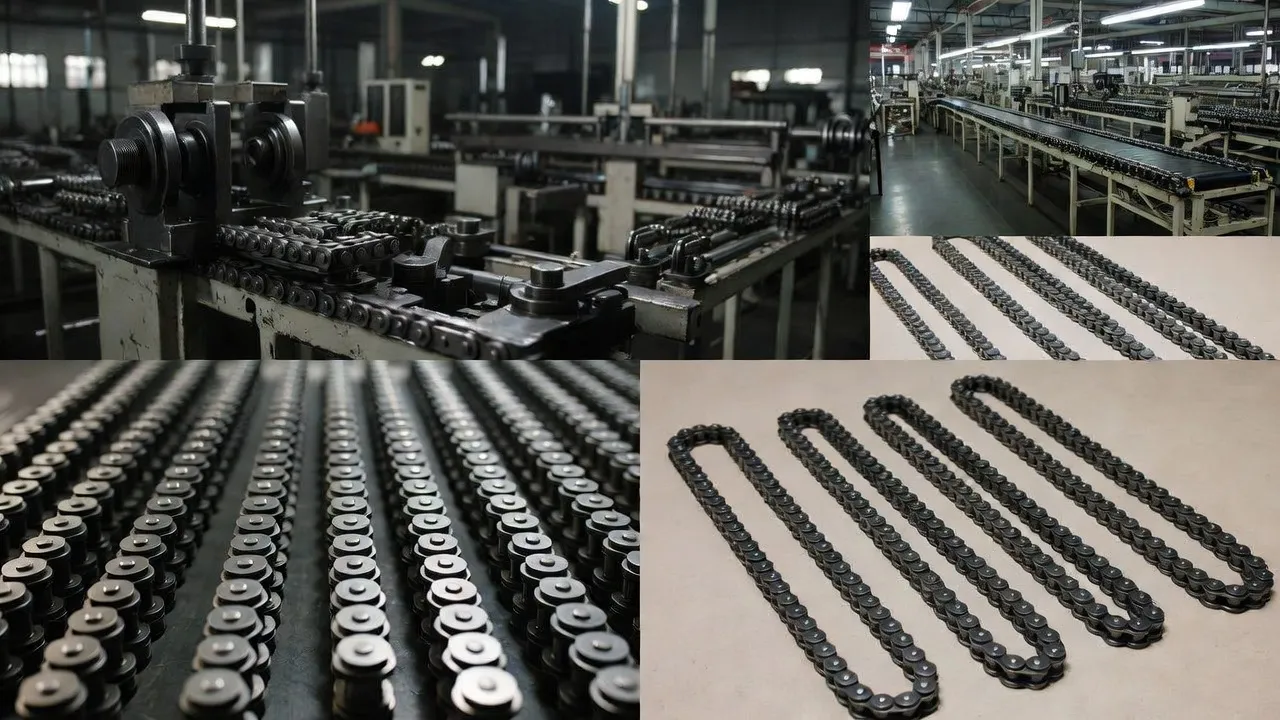
Simplex chain productivity improvement manufacturing plant Australia

Getting Started: Gear Drive Australia’s Manufacturing Productivity Support

Gear Drive Australia supports Australian manufacturing plants in implementing chain drive productivity programmes through a structured range of engineering and supply services. Our technical team has delivered productivity programme audits across food, beverage, packaging, and heavy manufacturing sectors, consistently identifying chain-drive improvements that deliver 2–6% OEE uplift within 12 months of implementation.

πŸ”

Plant Chain Drive Audit

On-site or document-based review of all chain drives, identifying specification gaps, maintenance programme weaknesses, and prioritised upgrade opportunities with quantified ROI estimates for each recommendation.

πŸ“

Drive Specification Verification

Engineering review of service factor, working tension, and chain grade selection for every drive flagged in the audit β€” confirming existing specifications or recommending upgrades with the technical justification needed for management approval.

πŸ“¦

Forward Supply Programme

Scheduled supply agreements aligned with your planned replacement calendar β€” ensuring chains are on-site before they are needed, at contract pricing, with batch certification included. Eliminates emergency procurement events and the premium costs they carry.

Explore Gear Drive Australia’s manufacturing chain range and technical resources at gear-drive.net β€” or contact our engineering team directly to schedule a plant chain drive audit for your Australian manufacturing facility.

To discuss a chain drive productivity programme for your manufacturing plant, speak with our technical team at Gear Drive Australia β€” serving manufacturing plants across all Australian states and territories.

Frequently Asked Questions

How much can simplex chain upgrades improve OEE in a manufacturing plant? +
OEE improvement from chain drive programme upgrades in Australian manufacturing plants typically ranges from 2% to 8%, depending on the baseline condition of the drives and the comprehensiveness of the programme. Plants with a history of regular chain failures and no elongation monitoring programme achieve the largest improvements β€” the shift from reactive to predictive chain management alone eliminates the availability losses from unplanned stoppages. Plants that already have some maintenance programme in place typically see smaller but still meaningful improvements of 1–3% from specification upgrades and smooth-drive measures. The financial value of these OEE improvements at typical Australian manufacturing production rates of $1,000–$5,000 per line-hour makes chain drive programmes among the highest-return maintenance investments available to manufacturing plant management teams.
What is the typical payback period for a chain drive upgrade programme? +
Payback period for chain drive upgrade programmes in Australian manufacturing ranges from 2 months to 18 months, depending on the production value at risk and the baseline failure frequency. The fastest payback occurs at plants with high production value per hour (above $3,000/hour per line) and frequent chain failures β€” a single avoided 4-hour emergency stoppage on one line may recover more than the entire programme investment. For plants with lower production value and lower failure frequency, payback typically occurs within 6–12 months as the combination of reduced maintenance labour, avoided emergency freight, extended chain life, and energy efficiency improvements accumulates. The detailed financial analysis required for management approval β€” combining line-specific production value, current failure cost data, and programme investment estimate β€” is available from Gear Drive Australia’s engineering team on request.
How does chain drive condition affect product quality metrics? +
Chain drive condition affects product quality through two mechanisms: speed variation and vibration. On filling lines, the polygon-effect velocity variation of a worn chain with a low-tooth-count sprocket generates fill weight variation proportional to the velocity variation percentage. If the nominal fill is 500 g and the velocity variation is 2.7% (17-tooth sprocket at moderate speed), the fill variation attributable to drive speed alone can reach Β±13.5 g β€” which may exceed the Β±10 g quality specification on a 500 g fill, forcing the operator to set the mean fill 10–15 g above nominal to ensure no underfills. This fill give-away accumulates across all production runs as a direct material cost. On labelling machines, chain elongation beyond 1% generates increasing positional variation in the label application cycle, eventually producing misaligned labels that require rework or rejection. Upgrading the filling station chain to 21+ tooth sprockets and replacing chains at ≀1.5% elongation can recover half of this quality give-away, delivering an improvement in OEE Quality that translates directly to reduced material cost per unit produced.
What is the most common chain drive mistake that hurts manufacturing productivity? +
The single most productivity-damaging chain drive practice observed across Australian manufacturing plants is waiting for chain failure before replacement. This reactive approach concentrates the replacement workload in emergency situations β€” when response speed, overtime rates, and expedited parts logistics combine to multiply the true replacement cost by 3–5Γ— compared with a planned replacement event. It also generates the unplanned production stoppages that dominate OEE Availability loss in facilities where chain drives are not managed proactively. The cost of implementing a 30-minute elongation measurement programme once per month β€” 3 minutes per drive, 10 drives, one technician β€” is trivially small compared with the value of a single avoided emergency stoppage on any production line valued above $1,000/hour. The pattern is so consistent across Australian manufacturing that the first recommendation in any chain drive productivity programme review is always: implement measurement and replace before failure, regardless of what else is done.
How do I calculate the production value of an unplanned chain failure? +
The production value of an unplanned chain failure combines four cost components. Direct production loss: production rate (units per hour) Γ— production value per unit Γ— stoppage duration (hours). A food packaging line producing 12,000 units per hour of $2.50 product stopped for 4 hours loses $120,000 in production value β€” not all of which is recoverable in catch-up production depending on shift constraints. Emergency maintenance premium: the additional cost of emergency labour callout, overtime rates, and expedited parts freight above what a planned replacement would cost β€” typically $500–$2,500 per event depending on location and timing. Secondary damage cost: if the chain failure causes damage to sprockets, bearings, or conveyor structure, add repair costs β€” these range from $500 to $50,000+ depending on the severity of the secondary damage. Investigation and restart cost: safety investigation, root cause analysis documentation, and controlled restart procedure add 30–120 minutes beyond the actual repair time. Summing these components for your specific production line and shift structure gives the financial exposure of each unplanned chain failure β€” the figure that justifies the investment in predictive maintenance with the clearest possible financial logic.
How does chain standardisation reduce manufacturing plant overhead? +
Chain standardisation β€” reducing the number of different chain sizes and grades held in inventory β€” reduces manufacturing plant overhead in five ways. Inventory carrying cost: fewer different part numbers means less capital tied up in spare parts inventory. Each additional chain size requires its own minimum stock level β€” reducing from 12 sizes to 4 sizes can reduce chain inventory investment by 60–70%. Procurement overhead: each chain size may require a separate purchase order, supplier relationship, and delivery tracking event. Consolidating to fewer sizes reduces procurement transactions proportionally. Technician training: maintenance staff develop deeper expertise in fewer sizes, reducing installation errors and improving replacement quality. Emergency stock coverage: a standardised emergency stock of two circuits per size covers more drives per dollar of inventory investment when the number of sizes is minimised. Lead time risk: fewer sizes means fewer occasions where a non-standard size has a long lead time and is not available when needed. Achieving standardisation typically requires redesigning some drives to use a standard size rather than the minimum-adequate size β€” a minor upfront engineering cost that delivers ongoing overhead savings across the facility’s operating life.
How do chain drive upgrades contribute to energy productivity targets? +
Energy productivity β€” producing more output per unit of energy consumed β€” is a mandated improvement target for large energy users under Australian federal and state energy efficiency programmes. Chain drive improvements contribute to this target through three pathways. Mechanical efficiency: correctly maintained simplex chain drives at 97–99% efficiency consume 3–8% less power than degraded, misaligned, or over-tensioned drives at equivalent output. On a facility with 200 kW total installed chain drive power, a 5% average efficiency improvement saves 10 kW continuously β€” at 6,000 operating hours and $0.20/kWh, this represents $12,000 per year in energy cost and a measurable reduction in the facility’s energy intensity ratio. Speed accuracy: chain drives that run at exactly the design speed do not require downstream systems (sensors, weighers, vision systems) to run at reduced sensitivity to compensate for speed variation β€” accurate drives allow downstream systems to operate at their designed efficiency point. Reduced production restarts: unplanned chain failures often result in cold-start production inefficiencies as lines warm up to steady-state production rates β€” each avoided failure eliminates these energy-intensive restart periods. All three pathways contribute quantifiably to the facility’s energy intensity KPI.
Can chain drive improvements reduce changeover time on multi-product lines? +
Yes, in specific ways. On multi-product lines where the chain drive speed is adjusted between product formats using VSD or sprocket changes, a well-maintained chain in good condition requires less re-tensioning time than a worn chain that needs tension adjustment every time it runs under a different load profile. More significantly, precision-grade chains with tight pitch tolerance maintain consistent engagement accuracy across all speed settings β€” worn chains may require re-calibration of sensors and vision systems after speed changes because the elongation-induced positioning error shifts with speed. This re-calibration step can add 5–20 minutes to changeover time on precision lines. Additionally, predictable chain behaviour simplifies the engineering of changeover sequences β€” operators can rely on a well-maintained drive performing as expected without the speed adjustments that variable, worn-chain behaviour would otherwise require during product start-up. These changeover time savings are typically modest (5–15 minutes per changeover) but accumulate meaningfully across high-frequency changeover schedules β€” a line changing products four times per day, five days per week, potentially saves 20–60 hours per year of changeover time from improved chain drive consistency.
How should I prioritise chain drive upgrades across a large manufacturing plant? +
Prioritise based on the production value at risk from each drive position, using a three-tier classification. Tier A (Critical): drives where failure immediately stops production on a line with production value above $2,000/hour, or where failure creates a safety hazard. These drives receive premium-grade chain, enclosed lubrication, laser alignment, and sub-1,000-hour elongation monitoring. Replacement is planned at 1.5% elongation regardless of shutdown schedule alignment. Tier B (Quality-Critical): drives where condition directly affects product quality metrics β€” filling stations, labelling drives, sealing mechanisms. These drives receive precision-grade chain with 21+ tooth sprockets, and monitoring at 1,000-hour intervals. Replacement is planned at 1.5% elongation aligned with next shutdown. Tier C (Non-Critical): auxiliary drives where failure causes inconvenience but not production stoppage. These drives are managed with standard maintenance-free or conventional chain as appropriate, elongation checked at 2,000-hour intervals, and replaced at 2% elongation. Starting with Tier A upgrades delivers the fastest financial return and uses that return to fund Tier B and C upgrades in subsequent quarters. This phased approach is both financially self-funding and organisationally manageable β€” introducing the measurement and recording practices on a subset of drives before rolling out facility-wide.
Tags:

Recent Posts

gear-drive

As one of leading gear-drive manufacturers, suppliers and exporters of mechanical products, We offer gear-drive and many other products.

Please contact us for details.

Mail:[email protected]

Manufacturer supplier exporter of bush chains

We specializing in the production of Agricultural Gearbox, PTO Shafts, Sprockets, Fluid Coupling, Worm Gear Reducers, Gears and racks, Roller Chains, Sheave and Pulleys, Planetary Gearboxes, Timing Pulleys, Shaft Collars and more.

We have exported our products to clients around the world and earned a good reputation because of our superior product quality and after-sales service.

We warmly welcome customers both at home and abroad to contact us to negotiate business, exchange information and cooperate with us.