

Description
Product Parameters
| Parameter | Specification | Parameter | Specification |
|---|---|---|---|
| Suitable for | Progressive lubrication systems | Pump core specifications | PE125/PE175 |
| Single-outlet single-stroke displacement | 0.125cm³/0.175cm³ (Depends on pump core) | Operating pressure | 350 bar |
| Safety valve set pressure | 300 bar | Pumped medium | Oil viscosity not higher than NLGl-cl2 |
| Operating temperature | -35~+70°C | Number of oil outlets | 1-4 (Up to 6 exits customizable) |
| Outlet pipe diameter | Ø6mm | Installation requirements | Oil drum perpendicular to horizontal plane |
| IP Code | IP6K9K | Weight | 5.6kg (Single pump core with safety valve, no grease) |
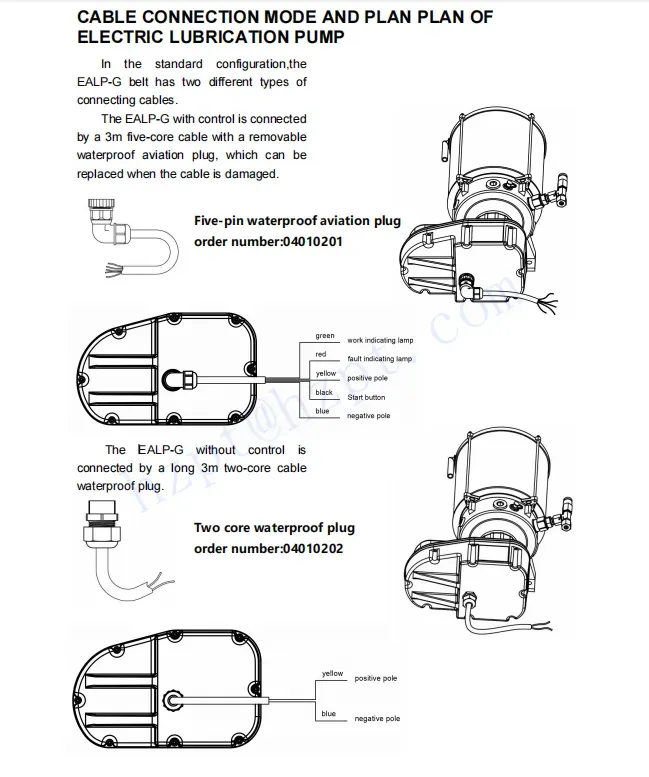
| Driver type | DC speed reduction motor | Working voltage | 12/24VDC |
| Incoming current | Max. 3.5/2.2A | Stall current | Max. 8.5/6.0A |
| Speed (pump scraper speed) | 17r.p.m |
Product Overview
The EP-EALP-G Series Electric Drive Piston Pumps are engineered for the demanding lubrication needs of heavy-duty machinery, such as XCMG excavators. This series provides an efficient and reliable solution for precise lubrication, ensuring optimal performance even in the most challenging environments. Designed to replace BEKA EP/EP-1 pumps, the EP-EALP-G offers superior performance, enhanced durability, and significantly lower maintenance costs.
These pumps deliver high-efficiency grease delivery, outstanding durability, and minimal maintenance requirements. Perfect for heavy-duty applications, especially those involving continuous lubrication, such as excavators and other large construction equipment, the EP-EALP-G Series is a trusted alternative to the BEKA EP/EP-1. With high adaptability and compatibility, it meets the needs of international clients.
Piston vs. Plunger Pumps
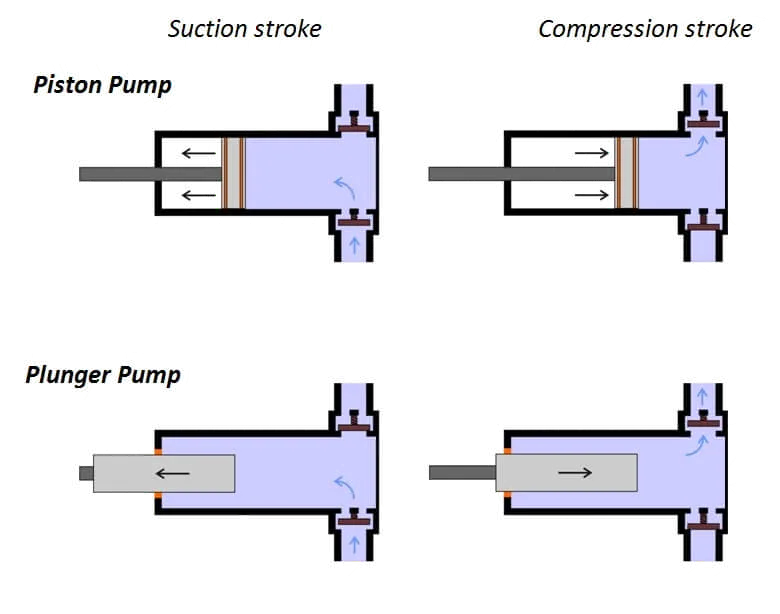
Although both piston and plunger pumps are commonly used in lubrication systems, they operate differently and serve distinct purposes. Plunger pumps typically use larger plungers with longer strokes to achieve higher flow rates, while piston pumps use smaller pistons that provide more precise and high-pressure grease delivery.
The EP-EALP-G Series features electric-driven piston pumps, which are ideal for high-pressure, precision lubrication applications. In contrast, plunger pumps excel in low-pressure, high-flow scenarios. Piston pumps, like those used in the EP-EALP-G Series, are specifically designed for applications where precise lubrication control and consistent performance over extended periods are essential, particularly in systems with multiple lubrication points.
Types of Piston and Plunger Pumps
Choosing the right lubrication system requires an understanding of the different types of piston and plunger pumps. Piston pumps are typically divided into single-stage and multi-stage varieties, while plunger pumps are categorized as direct-drive motor pumps or gear-reduction pumps.
The EP-EALP-G Series is a direct-drive electric piston pump, offering higher flow rates and adjustable pressure settings, making it ideal for heavy-duty machinery like XCMG excavators. This type of pump ensures consistent and reliable lubrication performance even under extreme operating conditions, providing superior longevity and system reliability compared to other pump types.
Piston Pump Working Principle
Piston pumps operate by using an electric motor to drive the piston in a reciprocating motion within the pump’s housing. As the piston moves, it draws in grease and then expels it at high pressure to deliver lubrication to the various points within the system. The pump maintains a consistent pressure output, ensuring smooth operation of the lubrication system even when the machinery is under heavy load.
The EP-EALP-G Series piston pump is powered by a high-performance electric drive, which guarantees stable lubrication at multiple work points. It is equipped with advanced safety features such as pressure regulation, relief valves, and air release systems, all of which contribute to its long-term reliability and performance. These features not only reduce maintenance requirements but also lower operating costs, making it an efficient and cost-effective solution for keeping machinery running smoothly.
Application Scenarios and Replacement Benefits
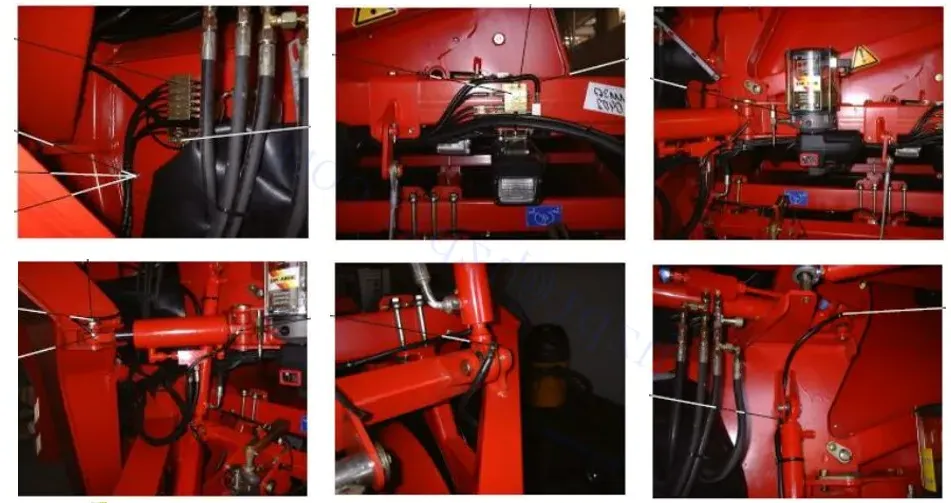
The EP-EALP-G Series Electric Drive Piston Pumps are specifically designed for lubrication systems in heavy-duty machinery such as excavators, construction vehicles, and large agricultural equipment. In these demanding environments, proper lubrication is essential to:
-
Prevent premature wear and breakdowns
-
Extend equipment lifespan
-
Ensure smooth operation during high-intensity tasks
As a replacement for the BEKA EP/EP-1 series pumps, the EP-EALP-G Series offers excellent compatibility. Its design ensures a seamless fit with various equipment interfaces, making it an easy upgrade without requiring complex modifications. Key benefits include:
-
Improved pressure output
-
Enhanced pump longevity
-
Ability to handle higher operational pressures
-
Extended service life
For overseas buyers, distributors, and OEM partners, the EP-EALP-G Series is not only a direct replacement for older systems but also an upgrade that enhances the overall reliability of machinery. With high efficiency and low maintenance needs, the EP-EALP-G minimizes lubrication system failures, ensuring consistent performance even in harsh conditions. The result is:
-
Reduced downtime
-
Lower operating costs
-
Improved equipment efficiency
Installation Guidelines and Usage Tips
Proper installation and maintenance are key to ensuring the long-term reliability of the EP-EALP-G Series lubrication pump.
Installation Tips:
-
Pump Alignment: Ensure the pump is correctly aligned with the equipment interface to prevent leaks or performance issues.
-
Pump Location: Install the pump in a location that allows for proper cooling during operation and is easily accessible for future inspections.
-
Electrical Connections: The EP-EALP-G Series supports various voltage configurations (e.g., DC12V, DC24V, AC220V). Select the correct power connection based on the equipment’s power specifications, ensuring stable electrical connections.
-
Safety Measures: Implement proper safety measures to protect electrical components from damage.
Grease Selection:
-
Grease Compatibility: Use high-quality grease compatible with the pump. Typically, NLGI 2 or higher grades are suitable, but select based on operating temperature, equipment load, and manufacturer recommendations.
-
Even Grease Distribution: Ensure each lubrication point receives an even and sufficient amount of grease to avoid under-lubrication and prevent wear.
Routine Maintenance:
-
Monitor Pressure: Regularly check the pump’s output pressure to ensure it remains within the normal range.
-
Inspect Seals: Periodically inspect the pump seals for wear and replace them as needed.
-
Air Venting: Discharge any air from the pump to prevent grease contamination, ensuring smooth operation.
Troubleshooting Guide
Here are solutions to common issues you may encounter with the EP-EALP-G Series pump:
Pressure Drop:
-
Possible Causes: Seal integrity issues, leaks, or blockages in the pipeline.
-
Solution: Inspect seals and check for leaks or blockages in the system.
Low Output:
-
Possible Causes: Grease with too high a viscosity or air in the system.
-
Solution: Verify grease selection and perform air venting.
Grease Backflow:
-
Possible Cause: Incorrect installation of the return oil line.
-
Solution: Ensure the return oil line is properly installed to prevent grease from flowing back into the pump.
By following these guidelines and performing regular maintenance, the EP-EALP-G Series lubrication pump will operate efficiently for an extended period, boosting the reliability and longevity of your equipment.
FAQ
What is the maximum operating pressure of the EP-EALP-G Series pump?
The EP-EALP-G Series is designed to handle an operating pressure of up to 350 bar, ensuring stable performance even under high-load conditions. The safety valve is set to 300 bar for added protection.
Can the EP-EALP-G Series pump be used in multiple lubrication points?
Yes, the EP-EALP-G Series pump can support 1 to 4 oil outlets by default, with the option for up to 6 exits if customized. This flexibility allows it to cater to lubrication systems with multiple points.
What type of grease should be used with the EP-EALP-G Series pump?
It is recommended to use grease with a viscosity not higher than NLGl-cl2. Common grease grades such as NLGI 2 are generally suitable, but the specific selection should be based on the operating conditions, temperature, and load.
How often should maintenance be performed on the EP-EALP-G Series pump?
Regular maintenance should include pressure monitoring, seal inspections, and air discharge. Check for leaks and blockages in the system every 6 months to ensure optimal performance and avoid costly downtime.